Arrest of Jacob Barber
Defending JacobJacob Barber’s arrest is the moment the investigation’s accusation becomes a bodily fact: Jacob is handcuffed and held, but the circumstances of Ben Rifkin’s death remain contested. After hiding for hours around Cold Spring Park, nearby backyards, and the play structure behind the elementary school he had once attended, Jacob gives police one account of finding Ben’s body and then falls silent. His arrest brings his father’s fears and the case’s public logic into the same frame, while the repeated plea for his dad makes the immediate cost unmistakably personal.
Background and the search
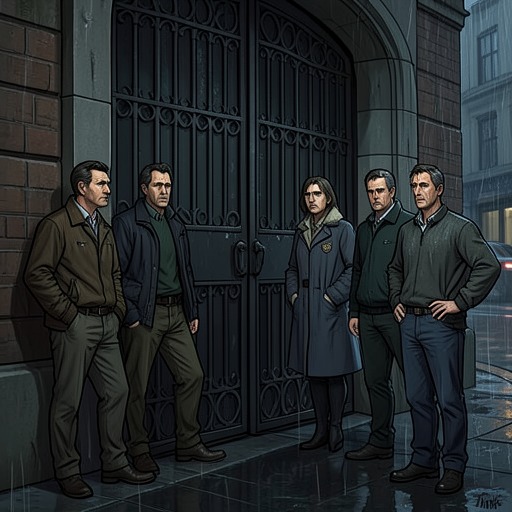
The arrest follows the discovery of a fingerprint associated with Jacob and the public accusation that has made him a suspect. Meanwhile, his father, Andrew Barber, is trying to protect him before the police arrive. Andrew has been searching Jacob’s room and weighing whether to hide the laptop; he fears it might contain damaging material, but also that its disappearance would itself look suspicious given Jacob’s online presence. He leaves it where it is. The doorbell rings, and the search warrant is delivered by Paul Duffy, Andrew’s old friend, now among the troopers executing the search. Andrew stands mute as Duffy presses the folded warrant into his hand, then is told to wait outside. The scene collapses the distinction between a prosecutor’s former professional world and his home: the friend is still recognizable, but the warrant has made him an agent of the investigation.
The search for Jacob continues into the evening. Andrew and Laurie wait until dark, after the police and onlookers have drifted away, but Jacob does not return. He has been hiding for hours, mostly in the woods of Cold Spring Park, in backyards, and in the play structure behind the elementary school he once attended. Police find him there at around eight o’clock. The route from the park to familiar childhood surroundings gives the arrest a stark geography: a wanted adolescent has been moving through places close to home, but cannot safely go home.
The arrest and Jacob’s statement
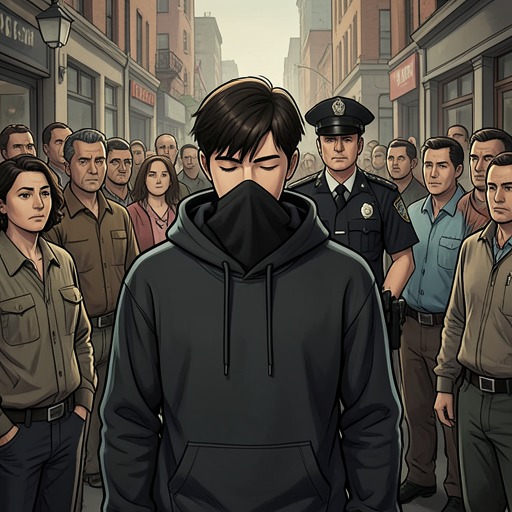
Jacob submits to the handcuffs without complaint and does not run. He tells the officer, “I’m the one you’re looking for” and “I didn’t do it.” When the officer challenges him about his fingerprint on Ben’s body, Jacob says he found Ben already lying there, tried to pick him up to help, saw that he was dead, and became scared and ran. It is the only statement he ever gives police. The account may sound like an explanation for the fingerprint as well as an admission that he was present; the narrative withholds certainty about whether Jacob blurted it out foolishly or deliberately shaped a defense. Andrew rejects the media’s portrait of Jacob as especially clever or cunning, but cannot settle what the statement means.
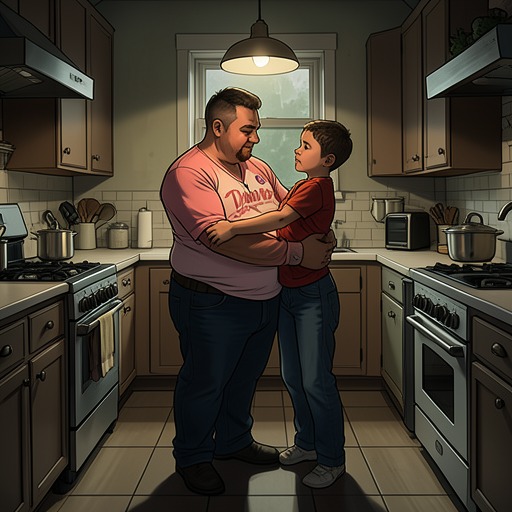
Afterward, Jacob says nothing further about the case. The only words he repeats to the officer are “I want my dad.” His silence, in contrast with that single, consequential explanation, makes the arrest both a legal turning point and an intimate scene of dependence. The boy who has just addressed the police about the body now reduces his demand to the person he wants beside him.
Custody and family consequence
Jacob cannot be bailed that night and is held in the lockup in Newton, only a mile or two from the family home. Andrew and Laurie are allowed a brief visit in a small, windowless room. Jacob’s eyes are watery and red-rimmed; his face is flushed, with a horizontal red mark across each cheek. He is visibly frightened, yet tries to hold himself rigid and composed, imitating an adolescent idea of manliness. Andrew sees panic, anger, and sorrow being held in check, and recognizes that Jacob cannot sustain the effort indefinitely. The arrest thus moves the family from the frantic uncertainty of the search to the physical reality of detention, without giving them either an answer or relief.
The family’s later experience makes clear that custody and eventual exoneration do not simply close the episode. Andrew recalls that life after Jacob’s release did not return to normal: the family went out little, avoided public places where they felt watched, and settled into a narrow routine at home. Andrew took over grocery shopping because Laurie feared another encounter with the Rifkins. The story’s distinction between a few decisive “Big Days” and the many ordinary days that follow gives Jacob’s arrest a long echo: the arrest is a momentous event, but what follows is not a clean ending. Even after the legal case changes, the family must live inside its consequences.